Journal · Cat care
For many cats, the stress starts when the carrier appears. A few changes at home can make the journey and the appointment calmer.
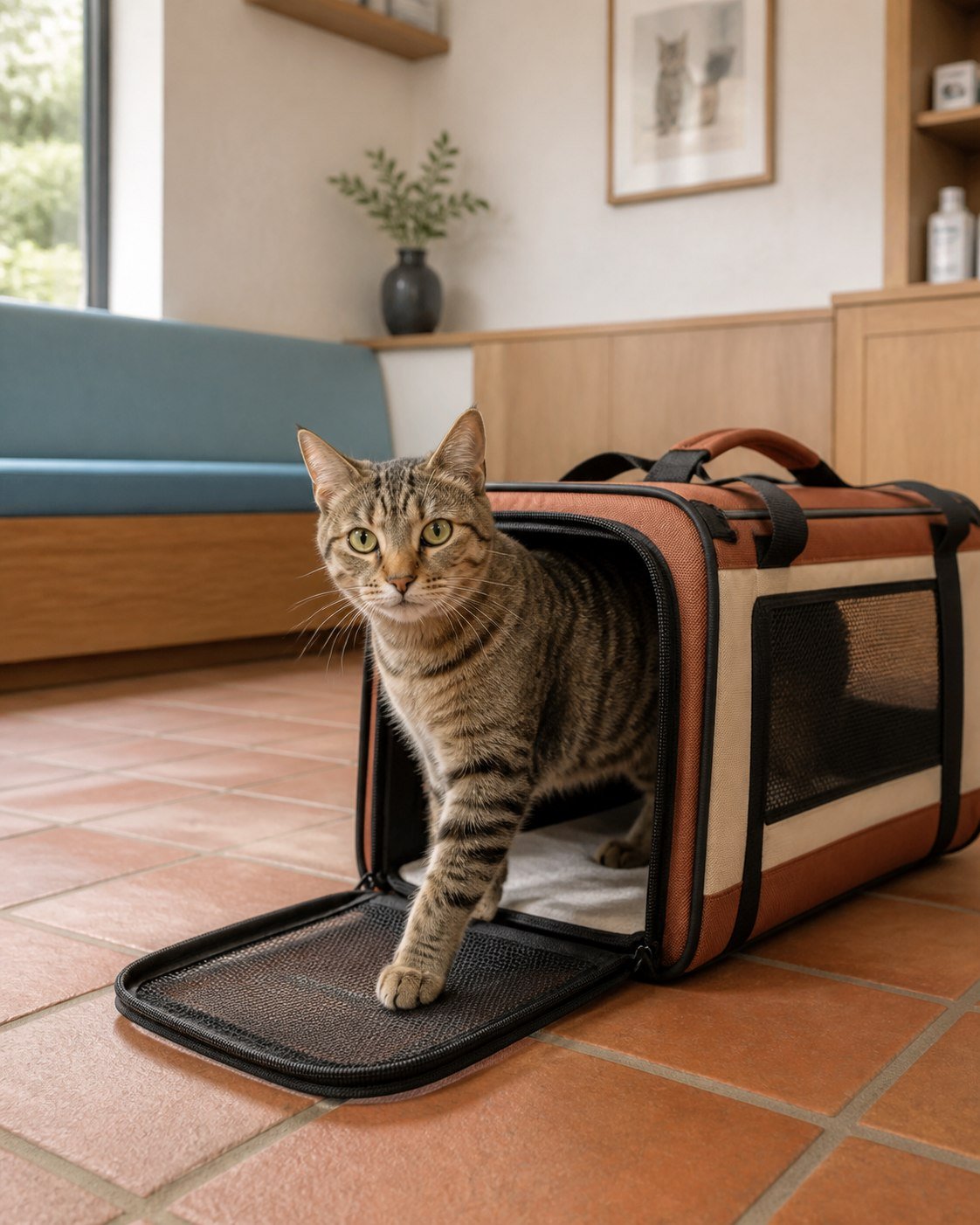
When someone says their cat “hates the vet”, the stress may start before the appointment. The carrier comes out, the cat is hurried inside and the floor begins to move. By the time they reach the clinic, both cat and owner are tense.
You can make that part easier at home. These are practical steps veterinary nurses regularly suggest to help cats feel safer before and during the journey.
Leave the box out
If the carrier only appears on appointment day, your cat can learn that it predicts an unpleasant journey. Leave it out where your cat already feels safe instead.
Remove the door or tie it open, then add a familiar blanket. Start by feeding your cat beside the carrier and gradually move the food inside. Over time, the carrier can become part of the room rather than a warning sign.
A cat who walks into the carrier on their own has had a calmer start than one who had to be pushed inside.
Choose a box that opens at the top
Front-opening carriers force everyone into a bad position. To get a frightened cat out you either tip the box up or reach in and pull, and both feel like a fight to the animal at the bottom of it.
A sturdy carrier that unclips around the middle or opens from the top makes this easier. The veterinary team may be able to remove the lid and examine your cat in the bottom half, on their own blanket.
Cover it, and keep it still
A towel over the carrier reduces the view of dogs, strangers and unfamiliar movement. Bring one from home so it smells familiar.
In the car, place the carrier securely in a footwell or fasten it on a seat so it cannot slide. Movement can add to stress and nausea. If your cat is still unsettled when you arrive, stay in the car and call the practice. The team may be able to take you straight to a consulting room.
Tell us before you arrive
If your cat is nervous, mention it when you book. The practice may be able to offer a quieter time, a cat-only consulting room, a wait in the car or a first visit with no examination.
For a genuinely frightened cat, that first no-examination visit is not a wasted appointment. It is usually the reason the second one goes well.
The short version
Five things to try before the next appointment.
{{ c.text }}
Written for a fictional portfolio concept. This is general information, not veterinary advice, and it cannot be used to diagnose or treat an animal. Always speak to a registered veterinary surgeon about your own pet.